EN
EN
 ES
ES






Courier
Specialist Services
Recent Searches
6th April 2026 | by Sam Nardi

In the immediate aftermath of a failed delivery, the first thing most businesses experience isn't crisis, it's confusion.
Nobody is quite sure what has happened. Is the vehicle delayed or has something gone seriously wrong? Is the consignment lost, or is it sitting in a depot waiting for paperwork? Has anyone actually spoken to the courier, or is everyone waiting for someone else to make the call?
This window, the first hour or so after a failure becomes apparent, is where a lot of the damage happens. Not because of the failure itself, but because of the uncertainty around it. Decisions get delayed. The wrong people get contacted. Time gets spent on finding out what's happened rather than on doing anything about it.
For businesses without a clear process for managing delivery failures, this confusion tends to drag on longer than it should. And every hour that passes is an hour in which the downstream consequences are getting harder to contain.
Not every failed delivery carries the same weight. A consignment of office stationery arriving a day late is an inconvenience. A critical component failing to reach a production line on time is a different problem entirely.
The severity of a delivery failure depends heavily on what's being delivered, where it sits in a production or service process, and how much buffer exists downstream. In B2B supply chains, particularly in manufacturing, construction, and healthcare, the tolerance for delay is often very low. A missing part doesn't just delay one step. It can stop an entire process.
This is worth thinking about carefully, because it shapes how seriously different failures need to be treated and how quickly a response needs to kick in. Not every missed delivery warrants a full emergency response. But the ones that do need to be identified and acted on fast.
Delivery failures escalate for a fairly predictable set of reasons. Recognising them makes them easier to interrupt.
The information gap: When the people who need to know about a failure don't find out quickly, response time is lost. This happens more often than it should because visibility across supply chains is still patchy in many businesses. A courier knows a delivery has failed before the recipient does, but that information doesn't always travel fast enough.
The decision delay: Even when people know something has gone wrong, acting on it quickly can be surprisingly difficult. If the person with the authority to commission an emergency delivery or contact an alternative supplier isn't reachable, or if the process for doing so isn't clear, valuable time gets lost.
The downstream effect: Production schedules, service commitments, and customer-facing deadlines are often tightly connected. A delay in one place creates pressure in another. If those pressures aren't managed proactively and communicated clearly, they compound quickly.
The customer communication gap: Often one of the most damaging parts of a failed delivery isn't the failure itself. It's finding out about it at the wrong moment, or from the wrong person, or not at all until it's too late to do anything useful. Customers who are kept informed and feel like someone is actively managing the situation respond very differently to those who are left to chase for updates.
A single delivery failure, handled well, rarely does lasting damage. The same failure handled poorly, or repeated without any obvious improvement, is a different story.
The commercial consequences of escalated delivery failures include:
None of these consequences are inevitable. Most of them are the result of a failure escalating further than it needed to. And most escalations are preventable with the right preparation in place.
When a delivery does fail, there is a meaningful difference between businesses that manage it well and those that don't. The difference usually comes down to a few things.
Speed of awareness: The faster you know something has gone wrong, the more options you have. Real-time tracking, proactive alerts from couriers, and clear communication channels between teams all contribute to this. Knowing about a problem at 7am gives you a very different set of options to knowing about it at 2pm.
Clarity of process: Teams that know exactly what to do when a delivery fails, who to contact, what alternatives are available, and who has the authority to act, respond faster and more effectively. This doesn't need to be a lengthy document. It needs to be something people have actually read and understand.
Access to alternatives: Having an existing relationship with a same-day or time-critical delivery provider means that when you need to recover a failed delivery fast, you're not starting from scratch. You're making a phone call to someone who already knows how to help you.
Proactive customer communication: Getting ahead of the problem with your customer, before they have to chase you, changes the dynamic significantly. Most customers can work around a delay if they know about it early enough. Very few can work around finding out about it after the fact.
A lot of businesses treat contingency planning as something they'll get around to eventually. The honest reality is that most of the businesses that handle delivery failures well have done some straightforward preparation in advance.
This doesn't need to be complicated. At its core, it involves a few practical questions:
Working through these questions before something goes wrong means that when it does, people aren't improvising under pressure. They're following a process that has already been thought through.
Beyond contingency planning for individual failures, there are broader steps that reduce how often failures happen and how badly they escalate when they do.
Diversify your transport options: Relying on a single courier for critical deliveries concentrates risk. Having access to more than one provider, including a specialist same day or time-critical option for urgent situations, gives you somewhere to turn when your primary arrangement falls short.
Improve your supply chain visibility: You cannot manage what you cannot see. Investing in better tracking and monitoring across your shipments means problems surface earlier, when they are still manageable, rather than later, when they have already caused damage.
Review your courier relationships: A good logistics partner does more than move goods from A to B. They communicate proactively when things aren't going to plan, they offer practical solutions when problems arise, and they understand the commercial stakes involved in your deliveries. If your current arrangement doesn't feel like that, it might be worth reassessing.
Build communication protocols into your process: Decide in advance how delivery failures will be communicated internally and to customers. The fewer decisions that need to be made under pressure, the faster and more consistently your team will respond.
Stress test your assumptions: Think about what your operation looks like when a key delivery fails at the worst possible time. Peak season, a major customer order, a Friday afternoon. If that scenario has no obvious answer, it's worth working on.
The reality of running a supply chain is that deliveries will occasionally fail. No logistics operation is completely immune to disruption, and pretending otherwise doesn't help anyone.
What separates businesses that handle this well from those that don't isn't luck. It's preparation, visibility, and having the right partners in place before something goes wrong. A delivery failure that is caught early, acted on quickly, and communicated clearly rarely becomes the crisis it could have been. The same failure, left to run without a coherent response, can cause damage that takes months to undo.
The good news is that most of this is within your control. Not the failure itself, perhaps, but everything that happens after it.
When a delivery fails and you need to recover fast, having the right logistics partner makes all the difference. Speedy Freight specialises in same-day and time-critical delivery across the UK, and that's exactly the kind of situation we exist to help with.
Here's what we bring to the table:
Whether you need an urgent consignment collected and delivered within hours, a reliable fallback when your primary courier falls short, or a logistics partner who understands the commercial pressures of B2B supply chains, we're set up to help without unnecessary friction.
If your current logistics arrangements don't give you a clear answer for what happens when a delivery fails, it might be worth having a conversation with us before you need one.
Get in touch with the Speedy Freight team today and let's talk about how we can support your operations when it matters most.
What are the most common reasons B2B deliveries fail? The most common causes include vehicle breakdowns, driver availability issues, traffic and route disruption, incorrect or incomplete delivery information, and capacity constraints at busy periods. Many of these are difficult to prevent entirely, which is why having a response plan matters as much as trying to avoid failures in the first place.
How quickly should a business respond to a failed delivery? As quickly as possible. In time-critical supply chains, even a delay of an hour or two in identifying and acting on a failure can significantly narrow your options. The businesses that handle delivery failures best tend to have processes that trigger a response the moment a problem is confirmed, not once it has been investigated at length.
How do I communicate a delivery failure to a customer without damaging the relationship? Be direct, be early, and be solution-focused. Customers respond far better to being told promptly what has happened and what is being done about it than to finding out later with no clear plan in place. Taking ownership of the problem, rather than explaining why it wasn't your fault, also tends to go down considerably better.
Is it worth having a same day delivery provider on standby for emergencies? For businesses where delivery failures carry real commercial consequences, yes. Having an established relationship with a same day or time-critical delivery specialist means you can recover a situation quickly rather than spending valuable time finding and vetting a provider while the clock is ticking.
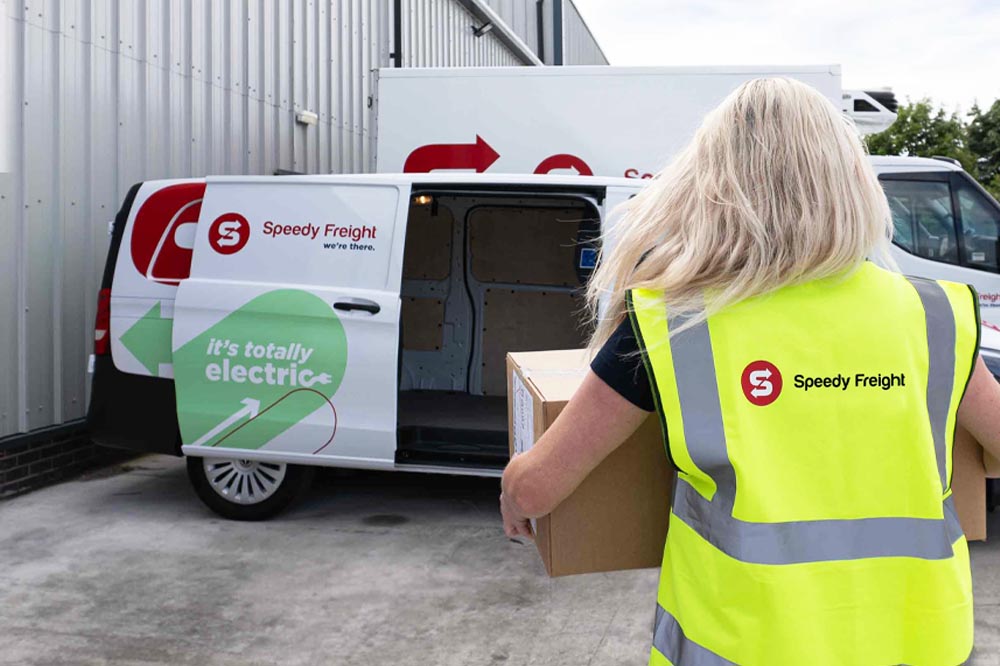
Dedicated, swift and bespoke – three key cornerstones of our end-to-end logistics service. With everything from same day delivery to specialist white glove and temperature-controlled transport solutions, Speedy Freight have the answers to your logistical problems. Our same day courier service operates 24/7, 365 days a year and covers the length and breadth of the nation. Whatever you need, whenever you need it, we’re there.

29TH AUGUST 2026

20TH AUGUST 2026

12TH AUGUST 2026

10TH AUGUST 2026